Part One: GoT Season I
Leadership is not the quality that typically comes to mind when thinking about what it takes to win a disc golf event, but in the Game of Throws this is exactly what it takes.
Nor is leadership necessarily a quality that most Baton Rouge players think of when asked about fellow disc golfer, and the first – and, so far, ONLY – winning Lord of a Game of Throws league series, Casey Cox.
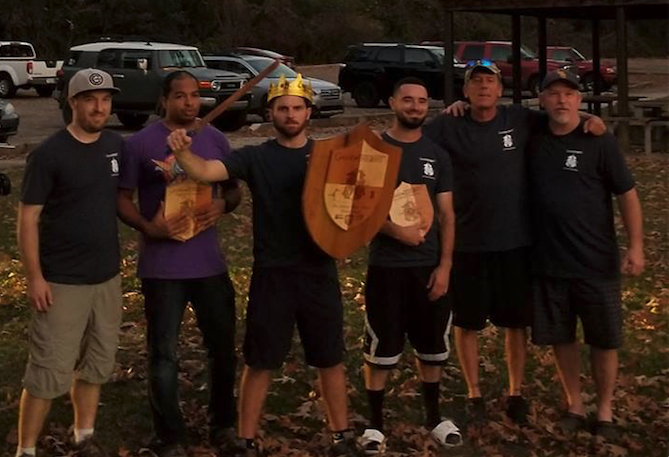
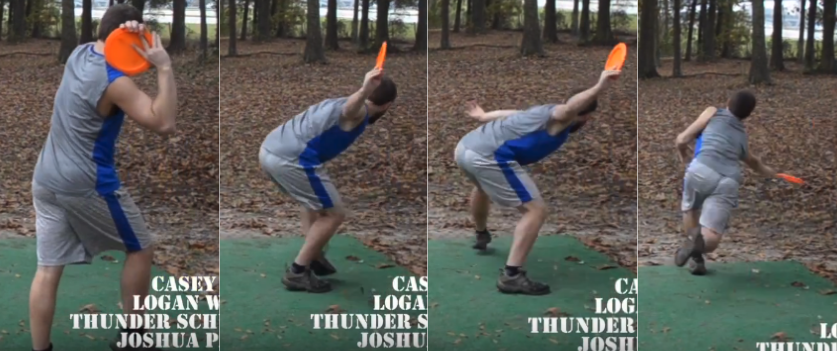
Casey has traditionally been something of a lone wolf in the Baton Rouge scene. He is an outstanding, albeit unorthodox, disc golfer, whose trademarks on the course include his signature submarine-style forehand drives and his off-the-charts intensity.
His demeanor on the course can be difficult to deal with, especially for people who lean towards casual disc golf and may only be dabbling in leagues or other semi-competitive formats. There’s no animosity in his approach to the game – he’s a good sport and plays by the rules, but when you are on his card you can just feel how badly he wants to beat you. Some people like to say that, “the most fun wins.” Not Casey. He thoroughly believes that, “winning is the most fun.”
In the Fall of 2017, Kingfish Disc Golf Club put on the first Game of Throws league series. It was not yet a team-format event, just a standard 8-week divisional/points-based series, and the only prize to be won were the divisional crowns. Through the first 7 weeks, Casey Cox was doing what he does best: competing hard and winning.
Moreover, he was dominating an MPO division in which he was one of the lowest-rated players by averaging almost twenty points over his rating. Exactly how or why Casey has played so well during the Game of Throws series has been the subject of much speculation – some thought it was because the LHC DiscGolfPark course played to his game, others speculated that he was raised by a pack of Dire Wolves and just felt at home in the Game of Throws.
From my perspective it was all due to the fact that Casey cared so much about winning that he was willing to do the preparation necessary to separate himself from the field. This meant practicing the course throughout the week and arriving early on league mornings to get a thorough warm-up and test the course conditions, and whereas other players in the MPO division did not take the ‘local league’ very seriously, Casey was all business.
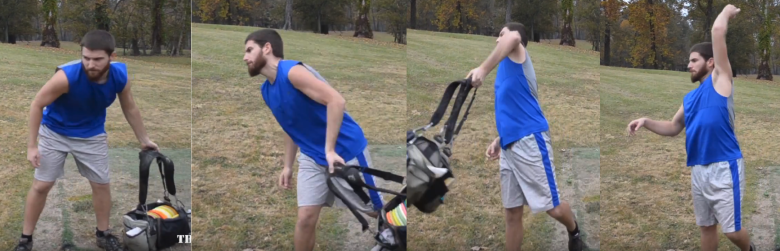
He came into the final week with an almost-insurmountable lead. The only player in the field with a shot to catch him was Prodigy-sponsored player Logan Weiss, and it would take not only a win by Logan but also a collapse by Casey in order for it to happen. Sure enough, this is how things played out: Logan went on to shoot a 1004-rated final round to edge out Casey, whose 939-rated performance was well below the standard he had set throughout the series. As commentator Chris Pennington would note during the event coverage, “things had gone terribly downhill.”
Part Deux: GoT Season II
Without getting too far into the details, let it just be said that Casey was not pleased with the way that the end of GoT season I played out. Some players in his position would have been so putt-off that they would have not returned to the event the next season, but not Casey – he let everyone know pretty quickly that he intended to return and finish what he had started.
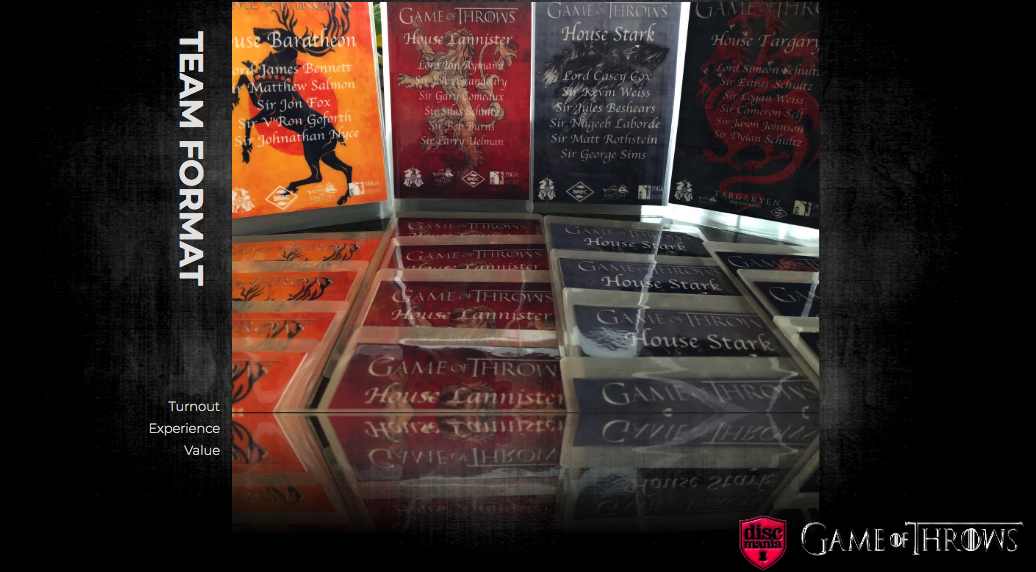
But when Casey found out that we were changing to a new team format for GoT Season II, he was not pleased. What good would all of his preparation and great play be if the rest of his team did not perform? He did at all not like the idea that his fate would be somehow tied to the performance of other players, and out of his control.
When Casey shot the hot round during the first week of GoT season II, becoming a House Lord and getting the first draft pick, I’m not sure if many believed he would be effective in the position. If he was too serious, too intense, he could easily turn away some of his players, and the team format was built to reward teams with consistently high turnout. For Casey, winning meant having fun, but for others the fun needed to come first before they could really get into being part of the event. Would Casey be able to get his team to show up and put in consistent performances?
The answer to this question turned out to be a resounding YES.
Along with being a great disc golfer and super-intense competitor, Casey also has a strong analytical mind, and when he determined that he was going to do whatever it took to win GoT Season II the first thing he did was to begin scrutinize the format to begin to work out the most strategic approach for leading his House. I remember this period was marked by him asking a persistent series of questions about the format – “what if this happens?” “what if that happens?”… etc. I was busy trying to get everyone on-board with the new format, so Casey’s persistent questioning was both supremely irritating but also totally invaluable as far as identifying and working out kinks in the design.
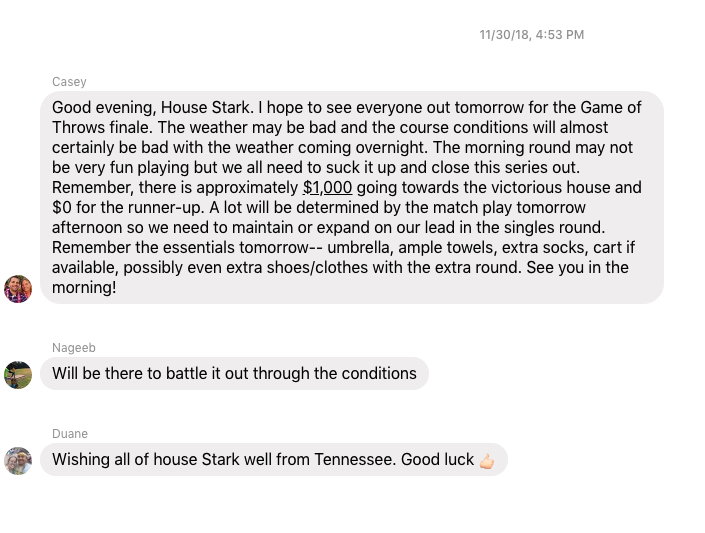
Casey’s intensive analysis led him to not only make great draft picks, but also, because he saw clearly how important turnout would be to the eventual outcome, he started to engage his players in a ways that got everyone involved and feeling like they were an important part of the team. He began weekly updates on social media to let everyone know who had had a great round the previous week and to get everyone hyped up for the next round.
And there was one other important ingredient in his success – ironically, it was that which everyone had thought might be the biggest obstacle: his competitive intensity.
Letting everyone know that you care about winning, as Casey does, is – I think – much harder to do than most people assume. It takes courage, because if you don’t win then everyone knows that you failed at something that you really cared about. Now, I don’t think Casey goes out of his way to let people know that he cares about winning… he doesn’t have to. It is clear just from being around him on the course.
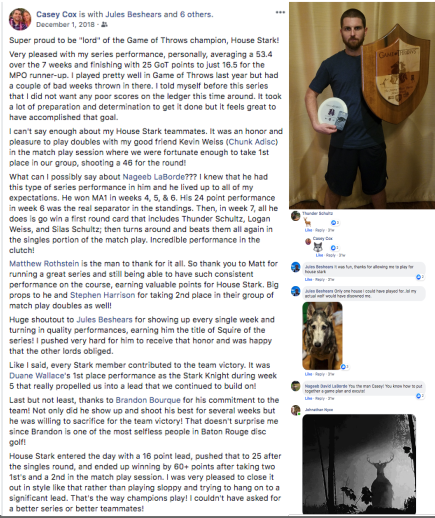
And whereas, as some of us thought, this might turn-off players playing under his leadership, it actually had quite the opposite effect: they began to care more, themselves. Casey set about winning GoT Season II the same way I’ve seen him in every other competitive context in disc golf: with unapologetic intensity and effort. And it worked.
 Discmania Game of Throws Blog